
Openback vs Resonator Banjo: History, Sound and Playing Style
Two classic banjo designs, two different voices — both rooted in tradition, both still inspiring players today.
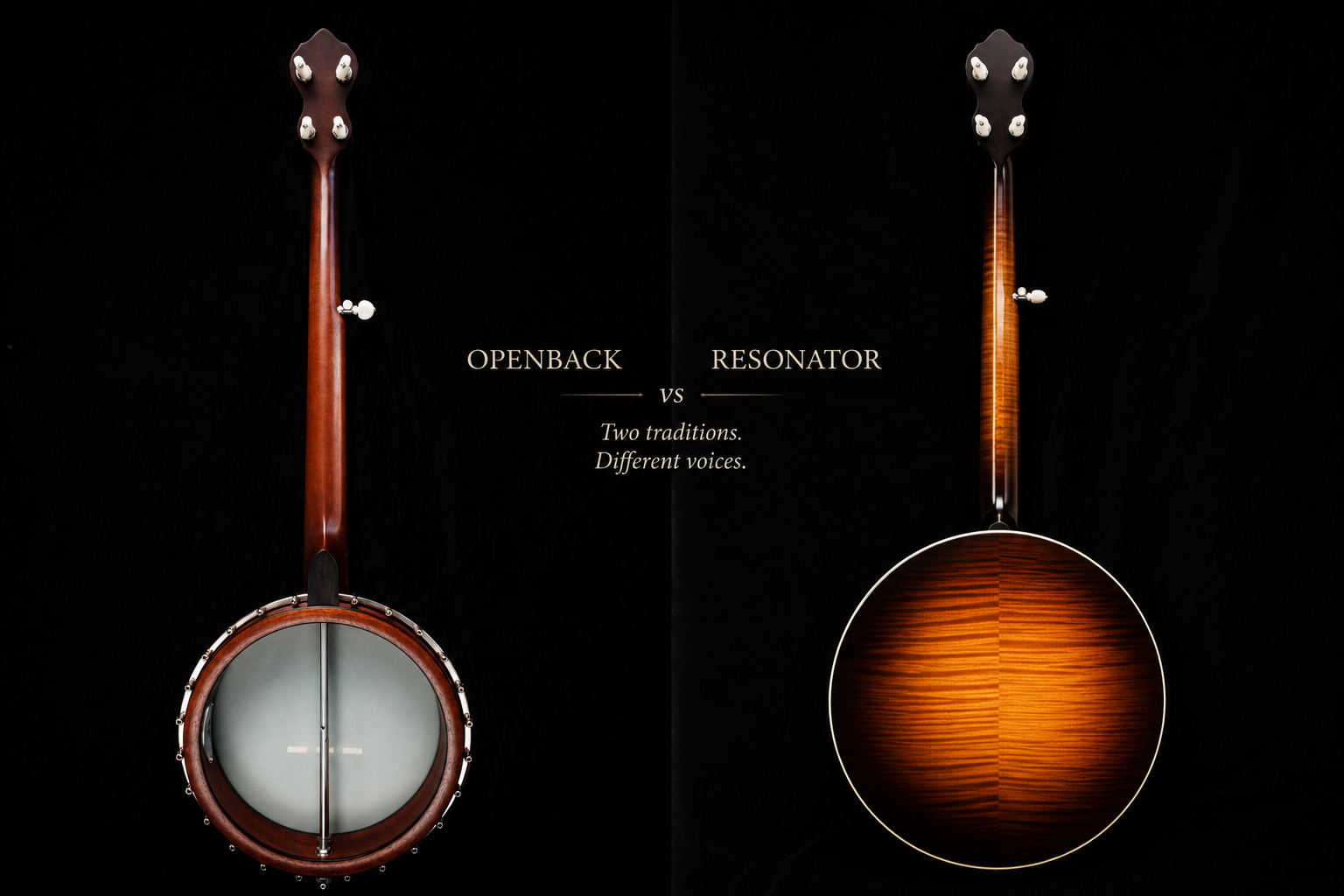
Openback and resonator banjos were shaped by different musical needs.
The difference between an openback banjo and a resonator banjo is not only visual. It is also historical, musical and practical.
Openback banjos are connected with older banjo traditions, folk music, old-time playing and clawhammer styles. Resonator banjos became strongly associated with projection, punch, bluegrass and ensemble playing.
At Coall Instruments, both types are approached with respect for their roots. The goal is not to decide which one is “better”, but to understand what each design offers to the player.
The banjo’s roots reach far beyond bluegrass.
The earliest ancestors of the banjo came from West African traditions. Instruments made from gourds, animal skin and wooden necks were brought to the Americas by enslaved Africans during the colonial period.
These early instruments are often called gourd banjos today. They already shared some of the essential ideas of the modern banjo: a membrane stretched across a body, a neck and plucked strings.
During the 18th and 19th centuries, the instrument gradually evolved in North America. Wooden rims replaced gourds, construction methods became more standardized and the banjo entered folk, dance and popular music traditions.
What we now call the openback banjo remained the standard form of the instrument for a long time. The resonator banjo would only appear later, when musicians began searching for greater projection and volume.
Openback banjos remained closely tied to old-time music.
By the late 19th and early 20th century, the banjo had already become deeply connected with American folk traditions. Many older playing styles developed on openback instruments long before bluegrass existed.
Clawhammer and frailing techniques became strongly associated with old-time banjo playing — a rhythmic, groove-oriented approach that still defines much of the openback sound today.
Even now, many musicians choose openback banjos specifically because they preserve this older, more acoustic and more direct connection to the instrument’s historical roots.
This historical continuity is one reason why openback banjos still hold such a special place in folk, Americana and traditional acoustic music.
The older, more open voice of the banjo.
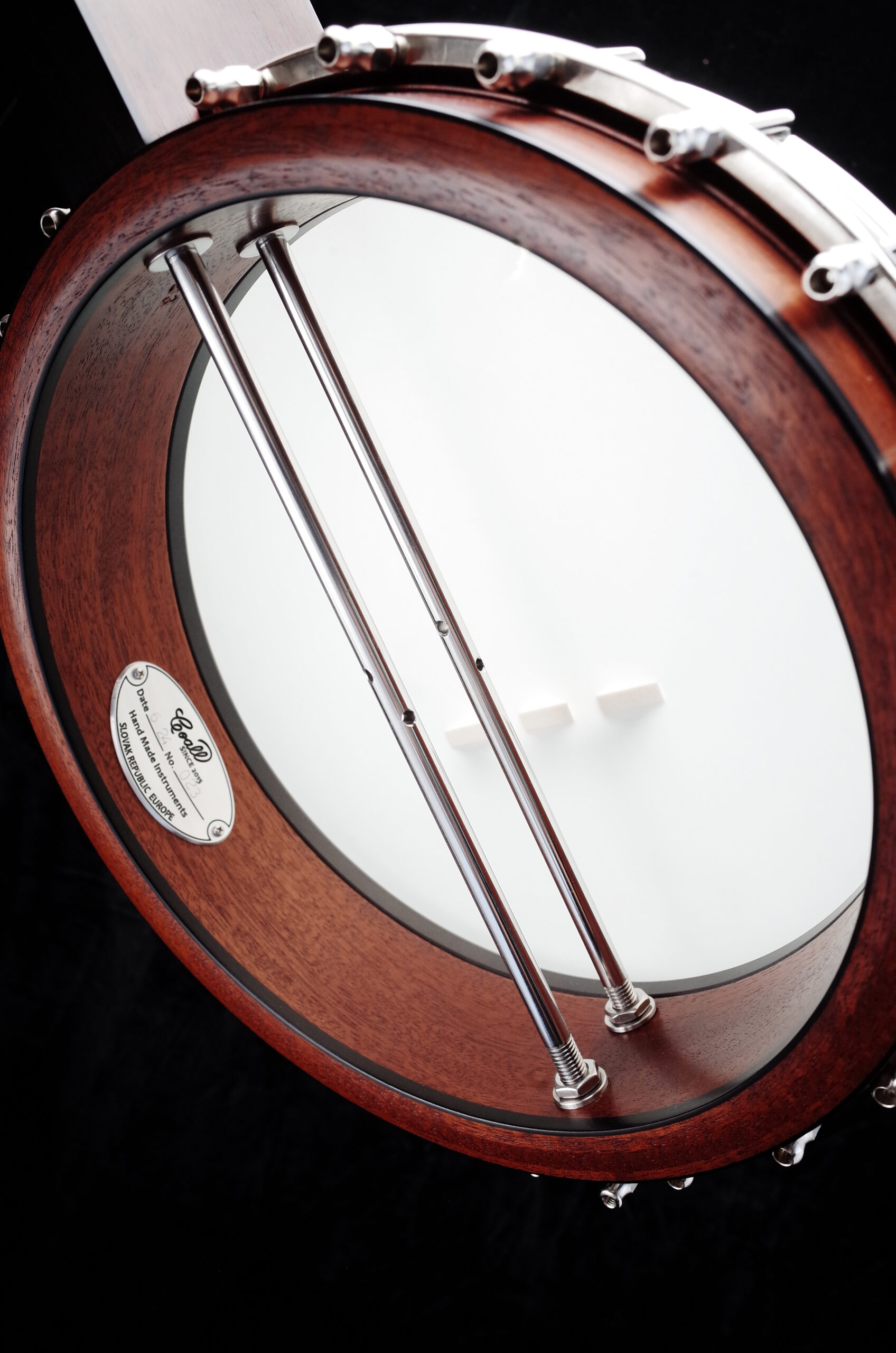
Early banjos were open-backed instruments. Their construction was direct and practical: a stretched membrane, a rim, a neck and strings. The back of the pot remained open.
This open construction gives the instrument a more immediate, woody and airy character. Some of the sound moves toward the player’s body instead of being projected strongly forward.
For many players, this is exactly the charm of an openback banjo. It feels intimate, responsive and natural — especially in clawhammer, old-time, folk and acoustic settings.
Why louder bands changed the banjo.
In the early 20th century, banjos increasingly appeared in larger ensembles, dance bands and eventually early bluegrass music. Players needed more projection, sharper attack and stronger presence.
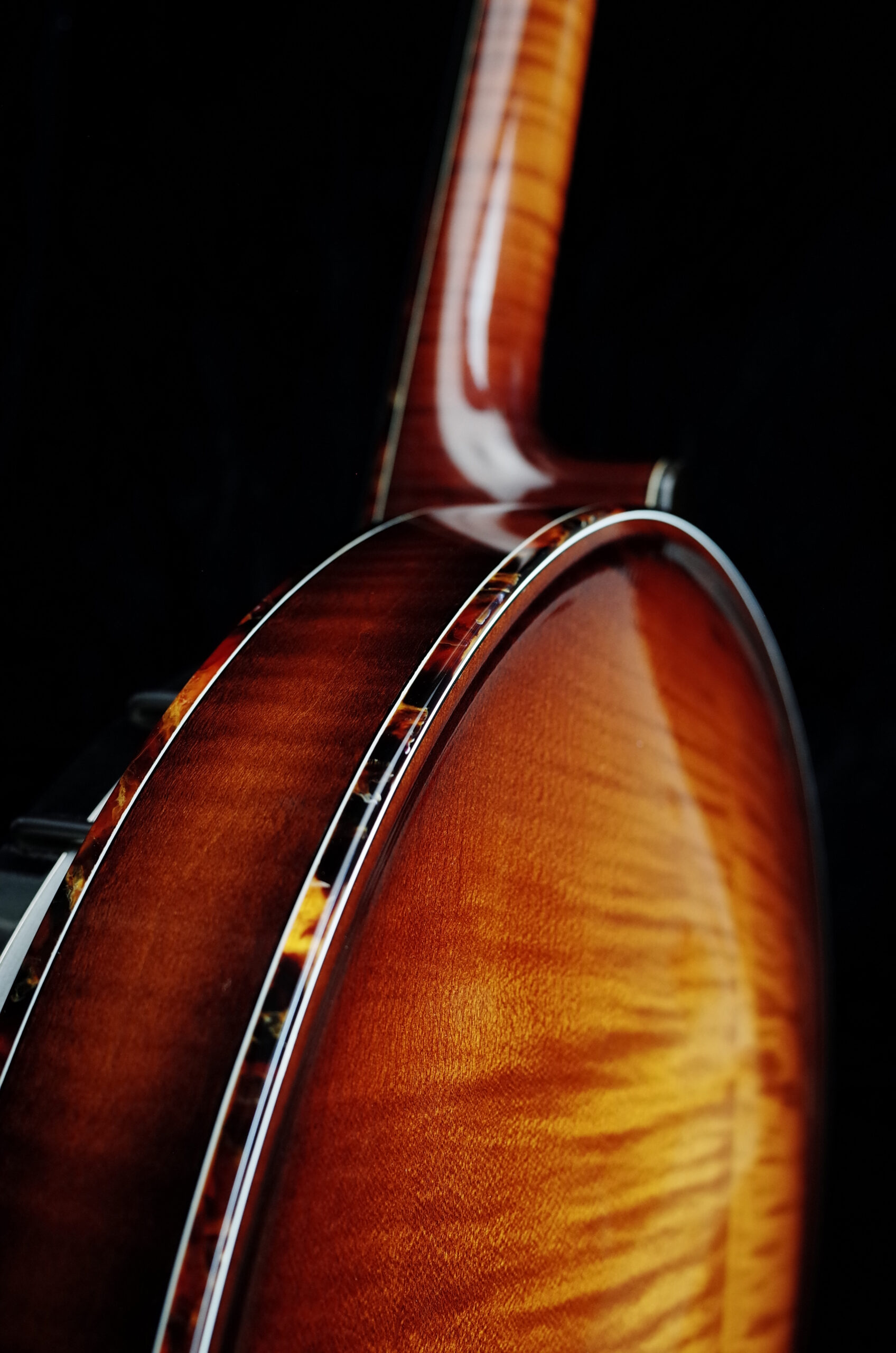
One of the important developments was the resonator: a wooden back added behind the rim to help direct more sound forward toward the audience.
Combined with metal tone rings and heavier construction, resonator banjos became louder, brighter and more cutting. This helped shape the powerful bluegrass banjo sound that later became strongly associated with players like Earl Scruggs.
How the resonator changes the sound.
A resonator banjo includes a wooden back mounted behind the rim of the instrument. Unlike an openback banjo, the rear of the pot is partially enclosed instead of remaining open toward the player’s body.
This changes how the sound behaves around the instrument. More of the energy is reflected outward, helping the banjo sound brighter, more focused and more directional to the listener.
Openback banjos usually feel more open, airy and diffuse, while resonator banjos often produce stronger attack, clearer projection and greater separation inside an ensemble.
The resonator itself is only one part of the sound. Tone rings, setup, bridge choice, head tension and playing style also shape the final response of the instrument.
Not better or worse — simply different.
An openback banjo usually speaks with a warmer, rounder and more open tone. It can feel lighter, softer and more intimate under the hands.
A resonator banjo usually offers more projection, stronger attack and a brighter, more focused sound. It is often chosen by bluegrass players because it helps the instrument stay clear in a band setting.
These are not strict rules. A good player can bring many voices out of either instrument. But the construction naturally guides the sound in different directions.
Which banjo fits which music?
Openback banjos are often loved by players of clawhammer, old-time, folk, Americana and acoustic singer-songwriter music. They sit beautifully in more natural and organic musical settings.
Resonator banjos are strongly connected with bluegrass and three-finger picking. Their clearer projection helps fast rolls, melodic lines and rhythmic drive stay present in a band.
Today, many players cross these borders. Some use resonator banjos outside bluegrass. Others bring openback banjos into modern acoustic music. That freedom is part of what keeps the banjo alive.
Weight, comfort and playing context.
Openback banjos are usually lighter and physically simpler. This can make them comfortable for long playing sessions, home practice, folk sessions or players who prefer a more direct contact with the instrument.
Resonator banjos are usually heavier because of the added resonator and hardware. For many bluegrass players, that extra weight is part of the familiar feel and sound.
The choice is often not only about tone. It is also about where you play, how you play and what kind of response inspires you.
Hear the openback character.
The openback banjo in the Facebook reel uses a ceramic tone ring and shows the more open, organic side of this type of instrument.
Because the video is a vertical Facebook reel, we link to it directly instead of embedding it into the article layout.
Built with respect for both traditions.
At Coall Instruments, openback and resonator banjos are not treated as competing worlds. They are two different branches of the same instrument family.
A resonator banjo can stay close to the familiar bluegrass feel: traditional proportions, strong projection, comfortable neck and a refined nitrocellulose finish.
An openback banjo can offer a more organic acoustic voice, lighter response and a character that feels at home in old-time, folk and contemporary acoustic music.
The right banjo is the one that supports your music, your hands and your sound.
Openback or resonator — which voice speaks to you?
If you are choosing between an openback banjo and a resonator banjo, we can help you discuss the sound, feel, construction and custom details that make sense for your playing.